
Introsea Webinar Series #4 : Strengthening the Upstream to Unlock Sustainable Seaweed Innovation

2026-08-13
2026-08-13
Indonesia’s seaweed sector is often discussed in terms of production volume. Yet the long-term strength of the industry depends on more than how much seaweed is harvested. It also depends on where it is cultivated, how farming systems respond to environmental pressures, how consistently raw materials are produced, and how those materials can be transformed into higher-value applications.
These connections were at the centre of INTROSEA Webinar Series #4, held on 31 July 2026 under the theme “Strengthening the Upstream to Support Creativity in a Sustainable Downstream Seaweed Industry”. The discussion brought together perspectives from aquaculture, product innovation, integrated pond management, and food biotechnology. Across four presentations, one message emerged clearly: downstream creativity begins with a strong and well-managed upstream foundation.
Choosing the Right Location for Kappaphycus Cultivation
The first presentation was delivered by Dr Irzal Effendi, Head Lecturer at the Faculty of Fisheries and Marine Sciences, IPB University. He focused on one of the most fundamental decisions in seaweed farming: selecting the right cultivation location.
Seaweed receives essential requirements such as sunlight, oxygen, nutrients, temperature, and water movement directly from its surrounding environment. Unlike production in a highly controlled facility, marine seaweed cultivation generally operates in an open system. This leaves farmers exposed to changes in weather, oceanographic conditions, pollution, competing uses of marine space, and other external pressures.
Dr Irzal highlighted how climate events can influence seaweed production. During El Niño, higher temperatures, increased evaporation, and rising salinity may place seaweed under stress and increase the risk of diseases such as ice-ice. La Niña can create a different set of challenges, including heavy rainfall, lower salinity, runoff from land, and changes in nutrient availability.
For this reason, site selection should not be treated as a simple question of whether seaweed can grow in a particular area. It requires the consideration of technical, economic, legal, and socio-cultural feasibility.
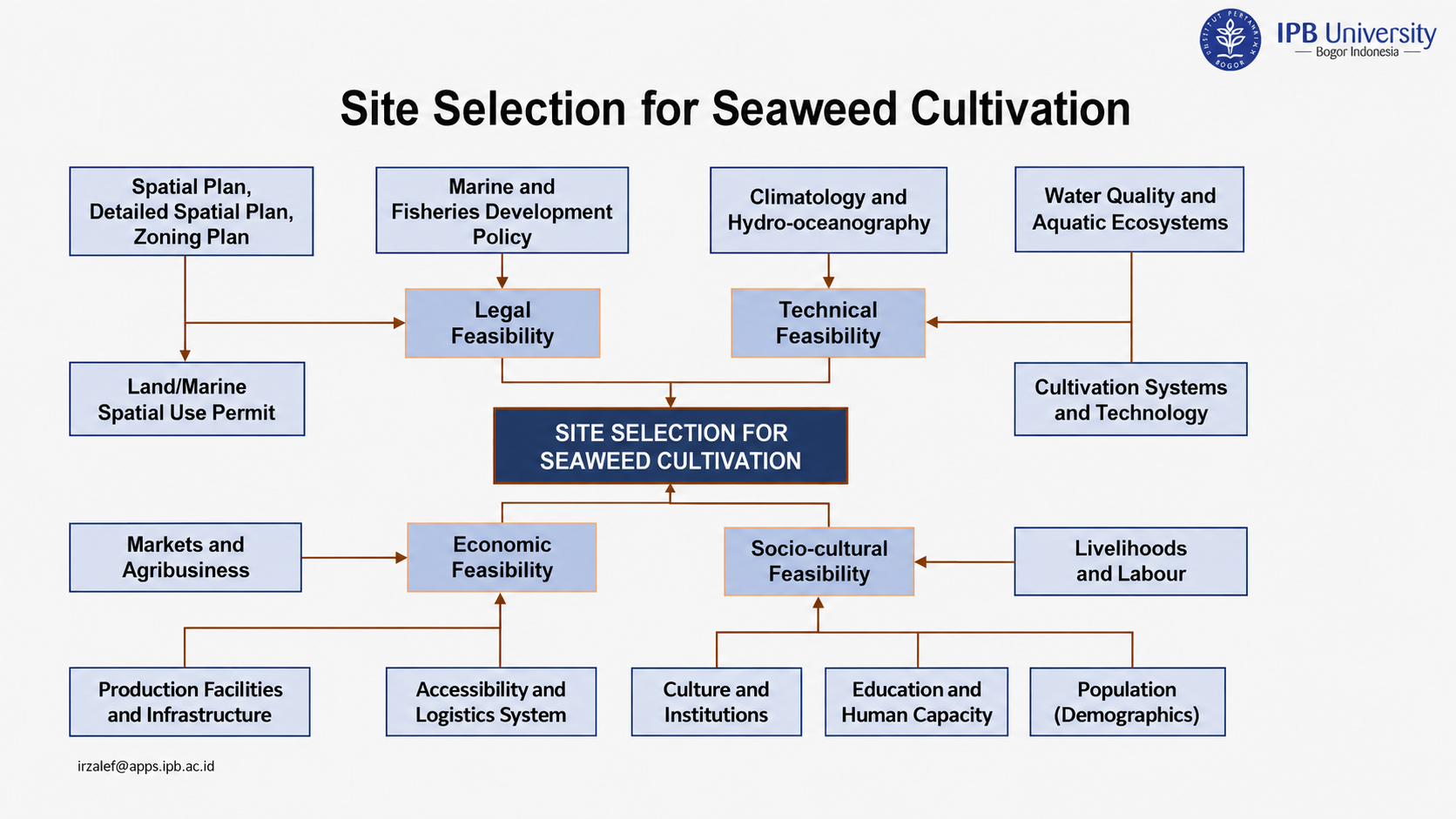
Image 1 : The location-selection framework and environmental criteria
For marine Kappaphycus cultivation, the presentation highlighted several important environmental characteristics. These include sufficient direct sunlight, moderate currents, suitable wave exposure, stable salinity, appropriate depth, clean water, and a seabed composed of sand, coral sand, or coral rather than mud. Cultivation areas should be protected from severe waves and storms, but not so enclosed that water circulation becomes too weak.
The location must also be compatible with local zoning regulations, logistics, market access, available infrastructure, community livelihoods, and existing maritime activities. A technically suitable site may still face difficulties if it creates conflict with fishing routes, passenger transport, tourism, or other coastal uses.
Strengthening the upstream therefore begins before the first seedling is tied to a cultivation line. It begins with understanding the ecosystem and selecting a site where seaweed, farmers, and surrounding marine activities can coexist.
Transforming Seaweed into a New Food Format
The discussion then moved from cultivation to product innovation with Hamzah Muhammad Ba’abud, a national seaweed practitioner, who presented the development of seaweed-based rice as an example of downstream diversification.
His presentation introduced Kasea Brown Rice Seaweed, a rice analogue developed using Indonesian seaweed. Rather than positioning seaweed only as a hydrocolloid source, snack ingredient, or addition to beverages, the innovation explores its use as part of an everyday staple food.
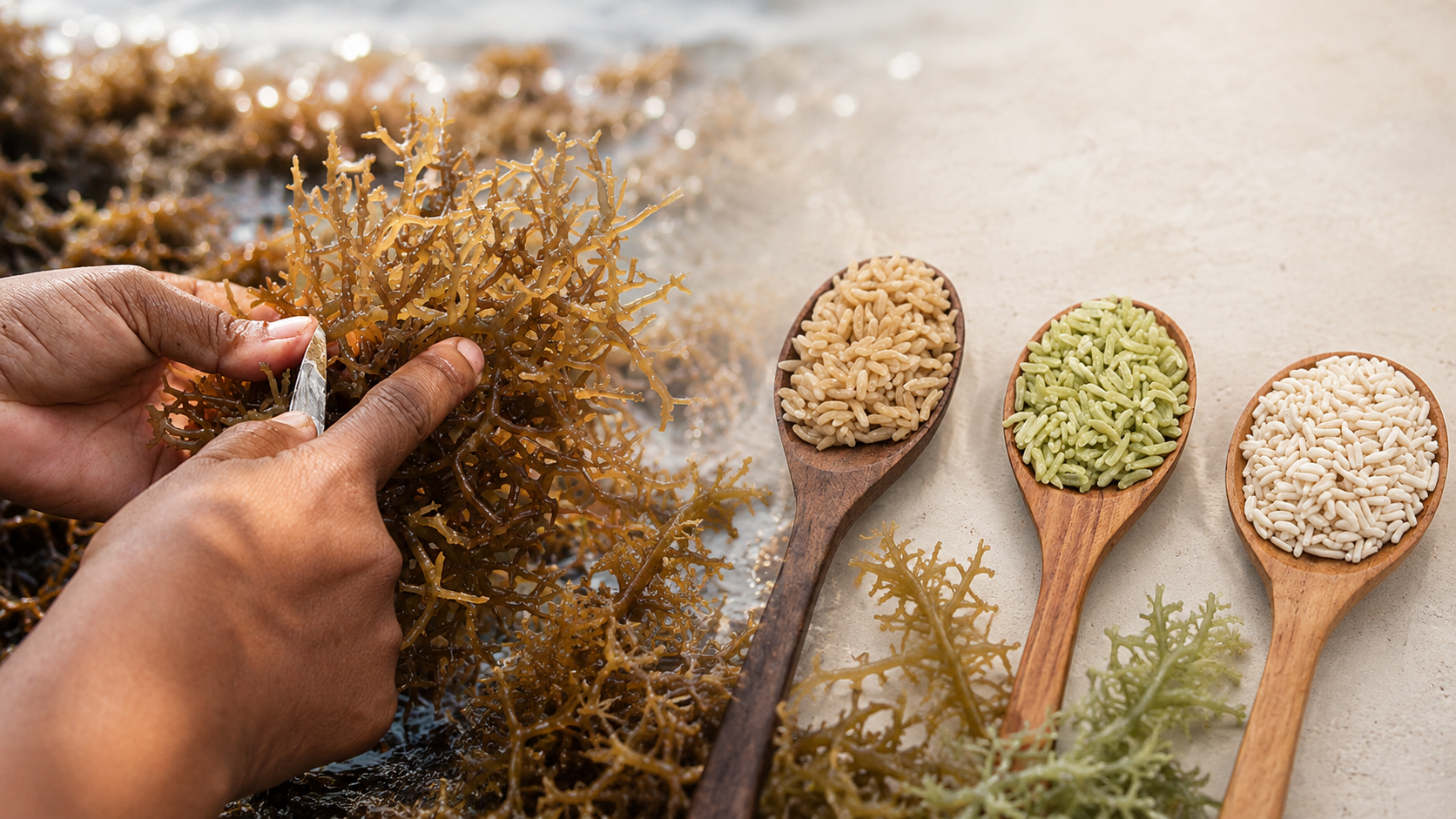
Image 2 : Seaweed rice product
The presentation described the product as a source of natural fibre with a low glycaemic index. It also highlighted its potential relevance for consumers seeking more varied food choices, including those following vegetarian or vegan diets.
Beyond nutritional positioning, the innovation illustrates how seaweed products can connect several objectives at once. These include supporting blue food development, creating new demand for marine raw materials, encouraging healthier food innovation, and expanding economic opportunities linked to coastal production.
The presentation also showed that downstream development is not simply about creating an unfamiliar product from seaweed. It can involve rethinking a familiar product, such as rice, and exploring how seaweed can add new functionality, nutritional value, and market differentiation.
Building a More Productive Gracilaria Polyculture System
The third speaker, Prof. Dr Esti Handayani Hardi from the Faculty of Fisheries and Marine Sciences at Mulawarman University, discussed the optimisation of Gracilaria cultivation through polyculture.
In this system, seaweed is cultivated alongside commodities such as milkfish and shrimp. Each species performs a different ecological role. Shrimp and fish produce nutrient-rich waste, while Gracilaria absorbs dissolved nitrogen and phosphorus. The seaweed therefore functions not only as a harvested crop, but also as a natural biofilter that helps maintain the pond environment.
This creates a more integrated production system in which the waste generated by one commodity becomes an input for another.
The approach also distributes production risk. When a pond contains seaweed, shrimp, and milkfish, farmers have several potential sources of income rather than depending on a single harvest. The presentation summarised this principle as one pond, three harvests, and one ecosystem.
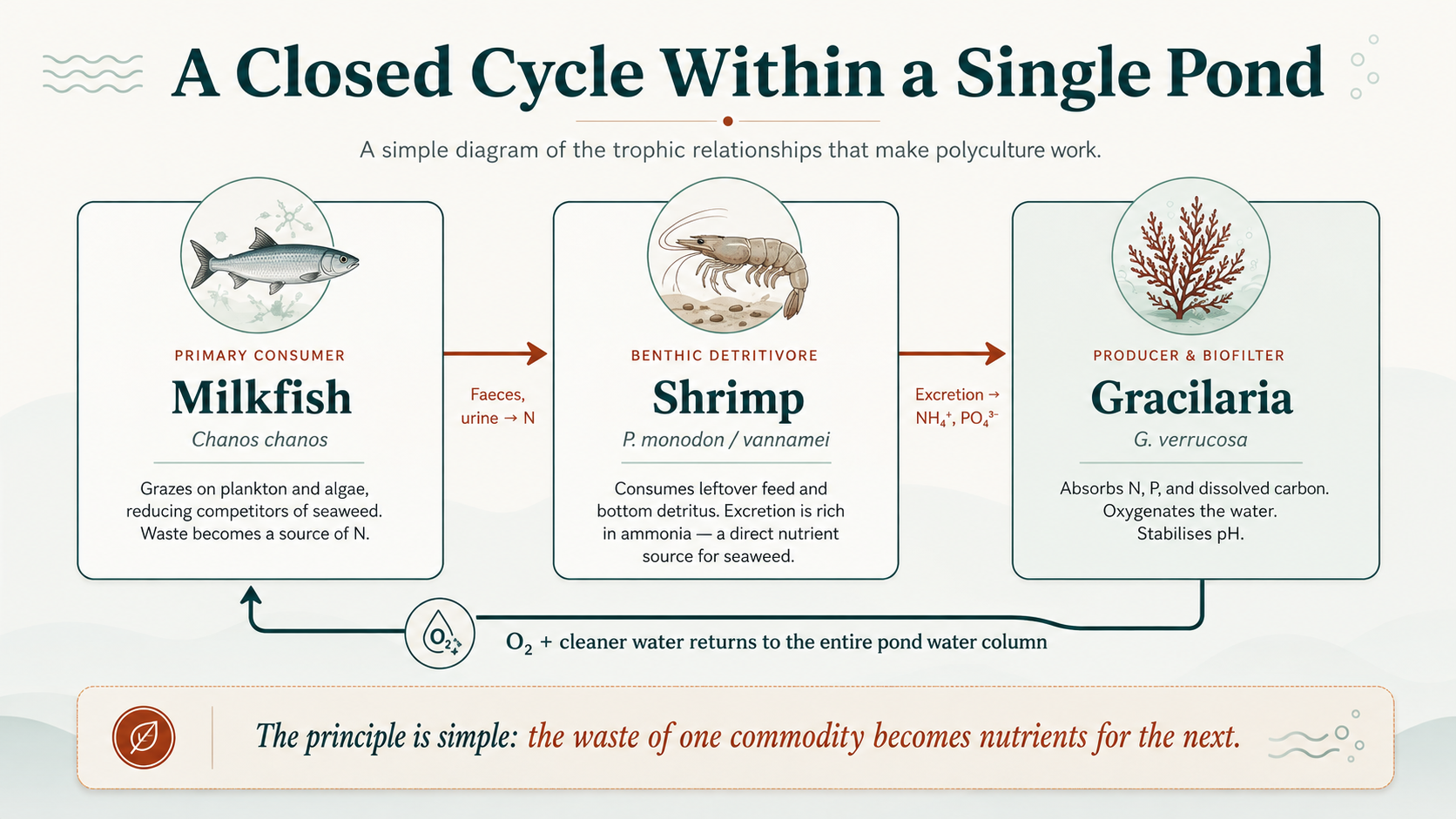
Image 3 : The ecological cycle diagram
Several practical factors influence the performance of such a system. These include pond preparation, seed quality, stocking density, nutrient management, water quality, and the method used to position Gracilaria within the water column.
Among the methods discussed, raising seaweed above the pond bottom using bamboo racks or suspended nets produced better results than placing it directly on the substrate in the cited trials. Elevating the seaweed improves access to light and water circulation while reducing contact with mud and sediment. Bamboo structures delivered the strongest performance among the three methods presented.
The session also highlighted the role of pond soil as a nutrient reservoir and discussed the use of vermicompost as a slow-release nutrient source. Water depth, salinity, dissolved oxygen, pH, temperature, and water clarity must be monitored to maintain a productive balance between seaweed, fish, shrimp, and plankton.
Importantly, optimisation is not measured only through biomass. Nutrient conditions can also influence agar yield, viscosity, and gel strength. This means that cultivation practices may need to be adjusted according to the intended downstream application.
For producers, this creates a direct connection between pond management and market strategy. Gracilaria intended for liquid agar or thickening applications may require a different quality profile from material intended for stronger gel products.
Exploring Gracilaria edulis as a Source of Milk-Clotting Enzymes
The final presentation was delivered by Dr Ariestya Arlene Arbita from Parahyangan Catholic University, who introduced a less familiar application of seaweed: the use of Gracilaria edulis as a potential source of milk-clotting enzymes.
In cheese production, milk-clotting enzymes destabilise casein proteins and cause milk to form curds. Conventional rennet is traditionally obtained from calves, although microbial, plant-based, genetically produced, and other animal-derived alternatives are also available.
Each source presents different considerations. Animal-derived rennet may raise supply, dietary, or religious concerns. Some plant and microbial enzymes may produce bitterness or affect the texture of the finished cheese. These limitations create a need to explore additional enzyme sources. Marine environments contain organisms adapted to varied salinity, temperature, pressure, and acidity. These conditions make marine biodiversity a promising area for enzyme discovery.
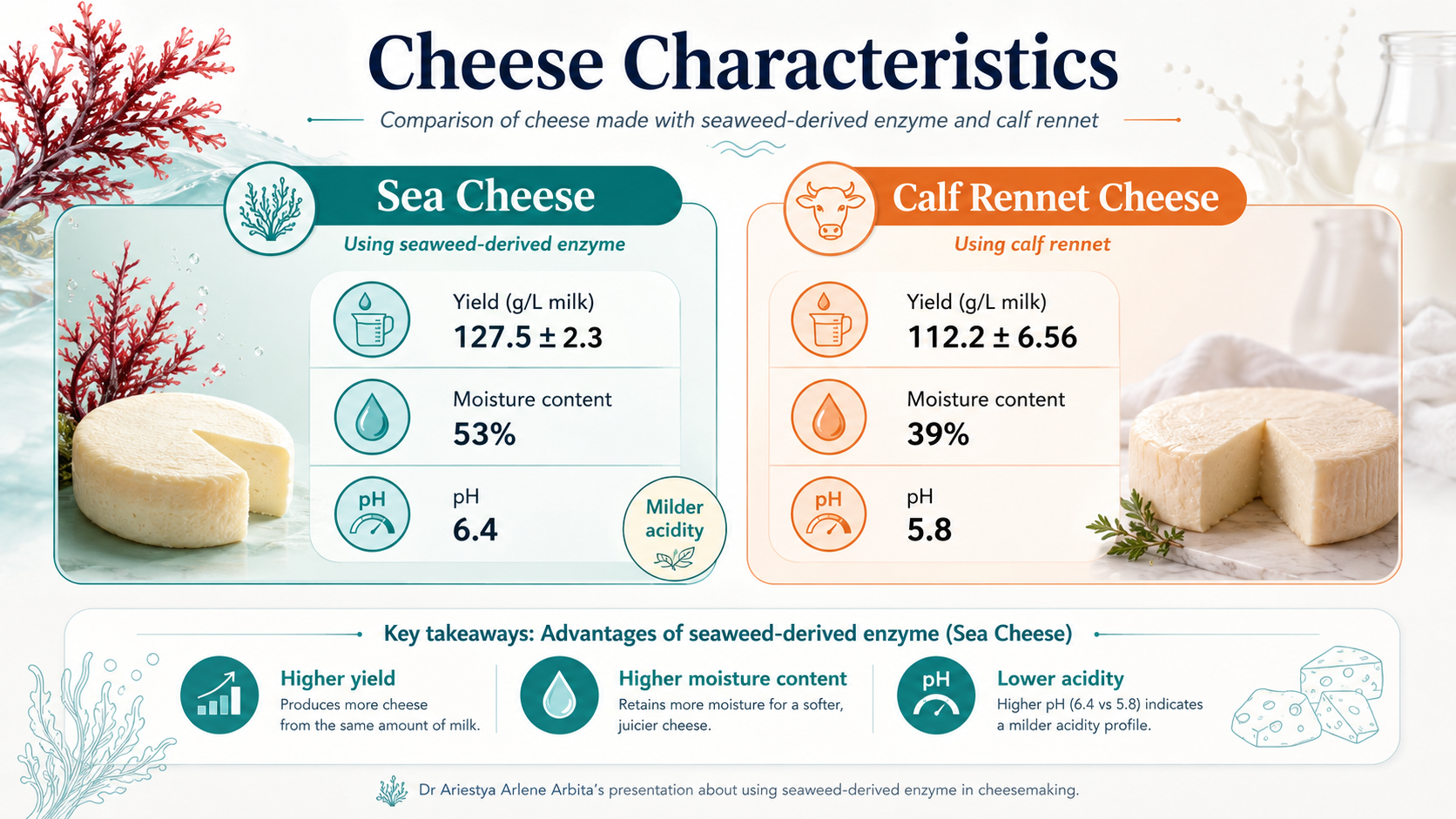
Image 4: Comparison of Cheese Characteristics Using a Seaweed-Derived Enzyme and Calf Rennet
Research presented during the webinar found that proteases extracted from Gracilaria edulis demonstrated milk-clotting activity and could cleave κ-casein at several points, including a site also targeted by calf rennet. The identified enzymes included serine and metalloproteases, with activity across a relatively broad range of pH and temperature conditions. However, strong proteolytic activity can present both advantages and challenges. Excessive protein breakdown during long maturation may contribute to bitterness. For this reason, the enzyme may be more suitable for fresh cheeses such as Feta than for long-ripened cheeses such as Cheddar.
The research remains at an exploratory stage. The enzymes have only been tested in a limited number of cheese applications, and further work is needed to understand purification, stability, sensory performance, production scale, and commercial feasibility.
Even so, the study demonstrates how seaweed may provide value beyond commonly recognised compounds such as agar and carrageenan. It could also contribute enzymes, bioactive peptides, and other functional ingredients for future food applications.
Connecting Cultivation with Creativity
The four presentations approached the seaweed sector from very different directions, yet they were closely connected.
Appropriate site selection helps reduce cultivation risk and supports more consistent Kappaphycus production. Integrated pond management can improve the productivity and functionality of Gracilaria farming. Reliable raw materials then give researchers and businesses greater scope to develop products ranging from seaweed-based rice to specialised food enzymes. This is why strengthening the upstream is not separate from downstream innovation. The two must develop together.
For Indonesia, the opportunity is not only to produce more seaweed, but to build a value chain in which environmental understanding, farming practice, scientific research, product development, and market needs inform one another. When these elements are connected, seaweed can move beyond its role as a raw commodity and become a platform for broader innovation in food, biotechnology, coastal livelihoods, and sustainable industry.
Source: Webinar Series #4 materials from INTROSEA, July 31, 2026.
Contact Person : Secretary General of Introsea, Bapak Didit Adiputra
Other Article
Introsea Webinar Series #5 : From Biomass to Bioeconomy Unlocking Higher Value from Indonesia’s Seaweed
2026-09-17
Introsea Talkshow Series #3: Mining Green Gold from Indonesia
2026-07-13
Introsea Webinar Series #2 : Transforming Indonesia’s Seaweed Industry for Food Self-Sufficiency and Global Competitiveness
2026-06-12